Composing for Dance: A Day at The Purcell School - Shevelle Dynott

Updated: Sep 7
Earlier this year, I was invited to The Purcell School by Alison Cox, the Head of Composition, to work with a group of incredibly talented young musicians. The idea was to explore how a dancer or composer might interpret each other’s work and how movement could bring their music to life.
I’ve done a bit of choreography before, but not enough to call myself a choreographer as such (though that might just be those little inner voices of doubt talking!). Still, this was something new and exciting, an opportunity I simply couldn’t pass up.

Arriving at the School
Walking into The Purcell School was a surreal experience. It felt familiar in some ways, probably because I went to a boarding school myself. As soon as I entered, I was greeted by a lovely receptionist and the sound of an organ echoing through the halls, a student deep in practice. Moments later, Alison appeared with a warm smile and such an open, friendly energy, exactly what I needed, because the nerves had definitely kicked in by then.
As we walked around, she told me The Purcell School is the oldest specialist music school in the country. I was genuinely amazed. You could feel the history and creativity in every corner of that building.
Meeting the Students
We eventually made our way to a classroom where students between the ages of 12 and 15 gradually drifted in. I introduced myself and explained a little about what I do. Then I set them a small creative challenge.
Imagine a being, perhaps an amoeba that suddenly finds itself alive. It moves, it experiences a moment of existence… and then it ceases to be. Now, express that journey through music.”
Immediately, questions started flying:
“Should it be for a solo instrument?”
“How long should it be?”
I told them honestly, “I don’t know, just do what feels right.”
They had fifteen minutes to create something. While they worked, I chatted with Alison, curious to see what would come out of such a short burst of inspiration.
The Magic That Happened Next
When the time was up, I wandered around the room, plugging into different headphones and I was completely blown away.
One student had written a piece for a full orchestra, full of rich textures and dynamic shifts. Another created something hauntingly beautiful on the piano. One had been writing on manuscript paper and then quietly picked up their clarinet to play a moving little melody. One student went full electronic, producing a piece that could easily have been played in a Berlin nightclub.
Their creativity, confidence, and imagination amazed me, especially considering how quickly it all came together.
Where Music Meets Movement
After listening, I spoke a bit about how choreographers sometimes use music as inspiration and how dancers and composers can collaborate to shape something new together. I demonstrated a few simple movements, showing how the same step can shift completely depending on the rhythm or tone of the music.
Then I shared a piece I thought had really shifted boundaries of ballet: the final scene of Akram Khan’s Giselle. It’s so atmospheric and poetic a perfect example of how sound and movement can fuse into emotion.
After that, I joined everyone for lunch in the school canteen (which was surprisingly delicious!) and later worked with one of the composers on a separate project, something I’ll write about in another post. I left that day feeling so inspired and full of ideas.
The Return Visit
Two weeks later, I was invited back to hear the final compositions the students had developed from that original task. What I heard absolutely floored me.
Each piece had evolved beautifully, thoughtful, emotional, and completely unique. Then Alison asked if I’d be willing to improvise some movement in response to each composition, right there on the spot. It was spontaneous, playful, and surprisingly moving.
That experience, collaborating with the next generation of composers, feeling
their energy and creativity is something I’ll carry with me for a long time. It reminded me why I love doing what I do: those rare moments when music, movement, and imagination all collide.
Show Day
Show day arrived quickly. The children were buzzing with excitement. I was too but beneath it all, I was incredibly nervous. The performance was at the National Theatre, and this year the British High Commissioner and his family were attending.
I had a brief meeting with the lighting and sound technicians. Their wonderfully relaxed island energy slightly terrified me, especially knowing I’d be on stage and not able to oversee everything. I was also handed 38 certificates to sign for every participant.
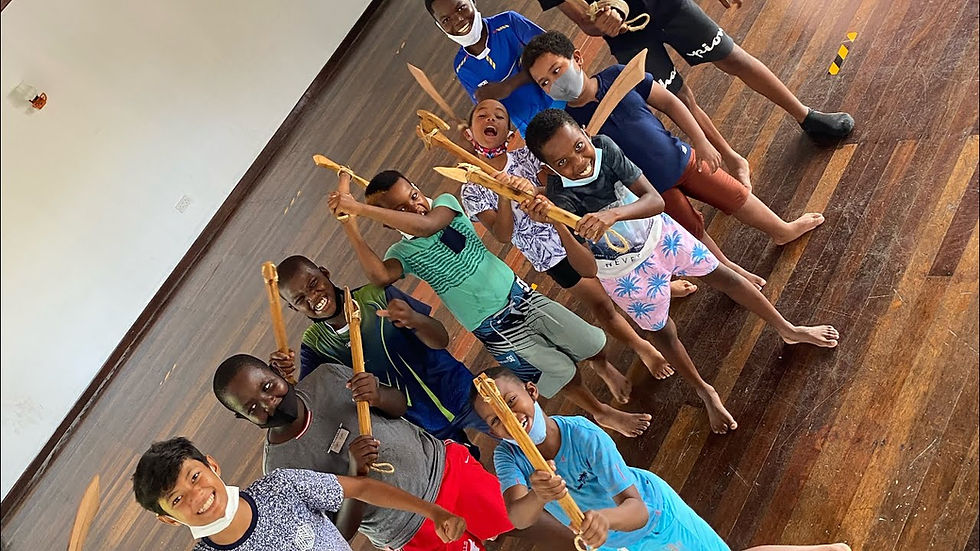
The show opened with a demonstration of class work, giving the audience insight into what the students had learned. Then Alice’s adventure began.
It was a success. The audience loved it some saying they hadn’t seen the story since they were children themselves. I presented the certificates alongside Jimmy Savvy, gave interviews with local media, and listened in disbelief as the High Commissioner spoke at the end of the performance, inviting me back the following year.
I was overjoyed.
That evening, friends gathered at my place local models, dancers, creatives. We shared food, laughter, and celebration late into the night.
As I sat in the airport the next day, tears welled up, just as they had the year before. This trip had pushed me further than ever, creatively and personally. Seychelles was no longer just a destination.
It was starting to feel like a second home.
The performance was not only about technique. It was about courage. Each student had to step onto the stage, face the audience and remember the choreography under pressure. That is a big achievement, especially for young performers.
The audience response added to the joy of the evening. Applause can be a powerful reward for students who have worked hard. It tells them that their effort has been seen. It also gives them a memory they can carry into future performances.
Seeing the students on stage was the most rewarding part of the trip. The same children who were learning steps in the workshop space now stood under the theatre lights, moving with expression and pride.
The National Theatre performance brought together the different parts of the workshop. The younger students, the older students and the larger groups all had their place. Each performance reflected a different stage of learning, but all of them showed commitment.
The event also highlighted how important cultural and artistic opportunities are for young people. Dance gives students discipline, but it also gives them joy. It helps them understand music, movement, teamwork and confidence.
Travel can often feel personal, but teaching while travelling creates a shared experience. The Seychelles workshop was not only about visiting Mahé. It was about meeting students, building trust, sharing knowledge and watching them rise to the occasion.
The final rehearsals before the show were intense, but necessary. Students had to clean transitions, remember spacing and adjust to the stage. Some corrections were repeated many times, yet each repetition brought the performance closer to where it needed to be.
By Show Day, the students had learned that preparation matters. They understood that performance is made from many small details, including posture, timing, silence, listening and focus.
The final stage moments were emotional. After all the work, the students stood together, took their bows and received the applause. It was a beautiful ending to the workshop and a reminder of why these artistic exchanges are so valuable.
“The most beautiful part of the workshop was seeing the students grow in confidence, from the first rehearsal to the final performance on the National Theatre stage.”
Looking back, the return to Seychelles was filled with movement, learning and connection. Mahé offered a beautiful setting, but the students made the experience unforgettable.
The workshop showed how dance can bring people together across places and ages. It can turn nervous beginners into confident performers. It can give children a stage, a voice and a memory of what they achieved together.
Being back in Seychelles was a reminder that every workshop has its own rhythm. This one was full of warmth, colour, effort and joy. From the first class to the final bow at the National Theatre, the journey was worth every step.
Tags: Seychelles, Mahé, Dance Workshop, National Theatre, Travel, Students, Children’s Dance, Performance
Categories: Travel / Dance Workshop / Seychelles
Share this post: Facebook | Instagram | X | WhatsApp


Comments